

Hi there! I’m a Ph.D. student in the Probabilistic Systems, Information, and Inference Group at the University of Cambridge. I hold a BA and an MEng in Information and Computer Engineering, also from Cambridge.
My research focuses on statistical signal processing and machine learning methods for audio and music processing, including high-resolution time-frequency analysis, music transcription, beat tracking, and signal decomposition.
I’m also interested in multi-object tracking and deep learning–based hierarchical generative models for music visualisation.
Selected Publications & Manuscripts
-
Authors: James M. Cozens, Simon J. Godsill
arXiv Preprint
Abstract: We introduce PHAST-Net, an attention-guided, physics-informed network for unified estimation of Ideal Time-Frequency Representations (ITFRs), spanning spectral, tempo-based, metrical, and harmonic representations such as Spectrograms, Tempograms, and Metrograms. PHAST-Net learns an application-general mapping from a constellation of wavelet transforms, the proposed Continuous Log-frequency Adaptive Wavelet Transform (CLAWT), to high-resolution, cross-term-suppressed time-frequency (T-F) representations. The proposed constellation of CLAWTs is selected through Cohen's class kernel analysis to maximise curvature coverage in a logarithmic-frequency T-F plane tailored to harmonic signal structure. PHAST-Net further incorporates a proposed physics-informed auxiliary reprojection loss designed to reconstruct the idealised observed CLAWT constellation from the predicted ITFR and the corresponding Cohen's class kernels during training. This auxiliary objective promotes transform consistency and energy conservation, mitigates pathological target sparsity, and enhances optimisation stability. Attention layers further promote effective cross-term suppression across the input constellation. The log-frequency formulation also enables Harmonic PHAST-Net, which estimates a Harmonic ITFR that isolates fundamental structure, supporting robust fundamental-only representations for speech and music, such as derived fundamental Tempograms and Metrograms. We further introduce Spline-PHAST-Net, which parameterises detected and associated T-F ridges as continuous spline trajectories, enabling arbitrary-grid re-rendering and signal reconstruction. Trained on an effectively unbounded procedurally generated dataset, PHAST-Net demonstrates improved accuracy over established approaches, providing a unified framework for high-resolution, cross-term-robust analysis of speech, music, and broader nonstationary signals.
-
Authors: James M. Cozens, Simon J. Godsill
arXiv Preprint; submitted to IEEE Transactions on Signal Processing
Abstract: We introduce a new method for estimating the Ideal Time-Frequency Representation (ITFR) of complex nonstationary signals. The Reconstructive Ideal Fractional Transform (RIFT) computes a constellation of Continuous Fractional Wavelet Transforms (CFWTs) aligned to different local time–frequency curvatures. This constellation is combined into a single optimised time-frequency energy representation via a localised entropy-based sparsity measure, designed to resolve auto-terms and attenuate cross-terms. Finally, a positivity-constrained Lucy–Richardson deconvolution with total-variation regularisation is applied to estimate the ITFR, achieving auto-term resolution comparable to that of the Wigner–Ville Distribution (WVD), yielding the high-resolution RIFT representation. The required Cohen's class convolutional kernels are fully derived in the paper for the chosen CFWT constellations. Additionally, the optimisation yields an Instantaneous Phase Direction (IPD) field, which allows the localised curvature in speech or music extracts to be visualised and utilised within a Kalman tracking scheme, enabling the extraction of signal component trajectories and the construction of the Spline-RIFT variant. Evaluation on synthetic and real-world signals demonstrates the algorithm's ability to effectively suppress cross-terms and achieve superior time-frequency precision relative to competing methods. This advance holds significant potential for a wide range of applications requiring high-resolution cross-term-free time-frequency analysis.
-
Authors: J. M. Cozens and S. J. Godsill
Published in: IEEE Open Journal of Signal Processing, vol. 5, pp. 140-149, 2024, doi: 10.1109/OJSP.2023.3344048.
Abstract: This paper proposes a probabilistic approach for extracting time-varying and irregular time signature information from polyphonic audio extracts, subsequently providing beat and bar line positions given inferred time signature divisions. This is achieved via dynamically evaluating the beat tempo as a function of time through finding an optimal compromise in beat and bar alignment in the time and tempo domains. Time signature divisions are determined based on a new representation, termed the Metrogram, that presents time-varying information regarding rhythmic and metric periodicities in the Tempogram. Our methodology is characterised by its ability to provide a distribution over metric interpretations, offering insights into the diverse ways music can be rhythmically perceived. Results indicate high-level accuracy for a variety of polyphonic extracts containing irregular, complex, irrational, and time-varying time signatures. Accuracy rivalling state-of-the-art methodologies is also reported in a beat tracking task performed on the standard Ballroom Dataset. The paper offers insights into the field of dynamic time signature recognition and beat tracking, offering a valuable and versatile resource for the analysis, composition, and performance of music.
-
Authors: J. M. Cozens and S. J. Godsill
Published in: 2024 27th International Conference on Information Fusion (FUSION), Venice, Italy, 2024, pp. 1-8, doi: 10.23919/FUSION59988.2024.10706333.
Abstract: This paper presents an adaptive approach to real-time multi-object localisation in addition to Siteswap inference, and performance evaluation metrics for juggling routines, employing a proposed bimodal machine learning-enhanced state-space model implementation. Considering the complex multi-modal characteristics exhibited by objects during performances, the paper introduces a bespoke Interacting Multiple Model (IMM) component for increased Siteswap beat detection accuracy and gravitational acceleration inference, and a scheme for causal Siteswap inference derived through machine learning-enhanced IMM mode outputs. The algorithm effectively models the transitory behaviour of the system, enabling rapid and smooth transitions between the two discrete tracking cases (airborne, and caught) and accurate Siteswap inference under a variety of camera and environmental conditions. The employment of beat tracking algorithms that exploit optimal compromises in time domain onset detection functions and Tempograms, enables effective error correction of Siteswap detections, in addition to providing performance analysis and visualisation utilities. Experimentally, the algorithm is capable of object tracking and Siteswap inference with up to 11 objects for a variety of challenging Siteswaps and conditions, serving as a versatile performance analysis, evaluation, and visualisation utility.
-
Authors: J. M. Cozens and S. J. Godsill
Manuscript in preparation; preprint expected, 2026
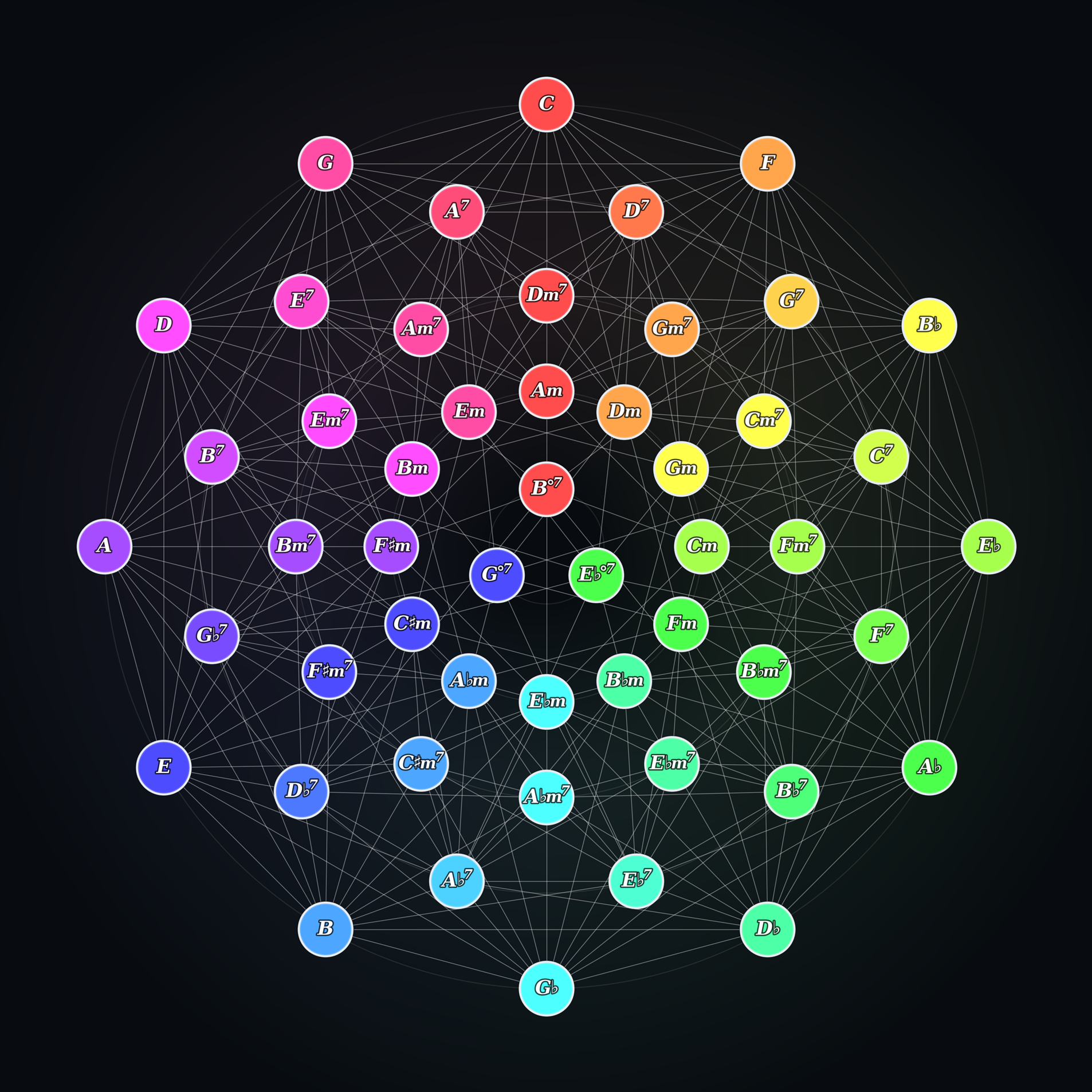
The Chromesthetic Music Visualiser is a Real-time audiovisual system combining neural-network analysis and procedural graphics to map harmony, timbre, rhythm, and key structure to colour, texture, and motion.
-
Authors: J. M. Cozens
Undergraduate dIssertation, 2022
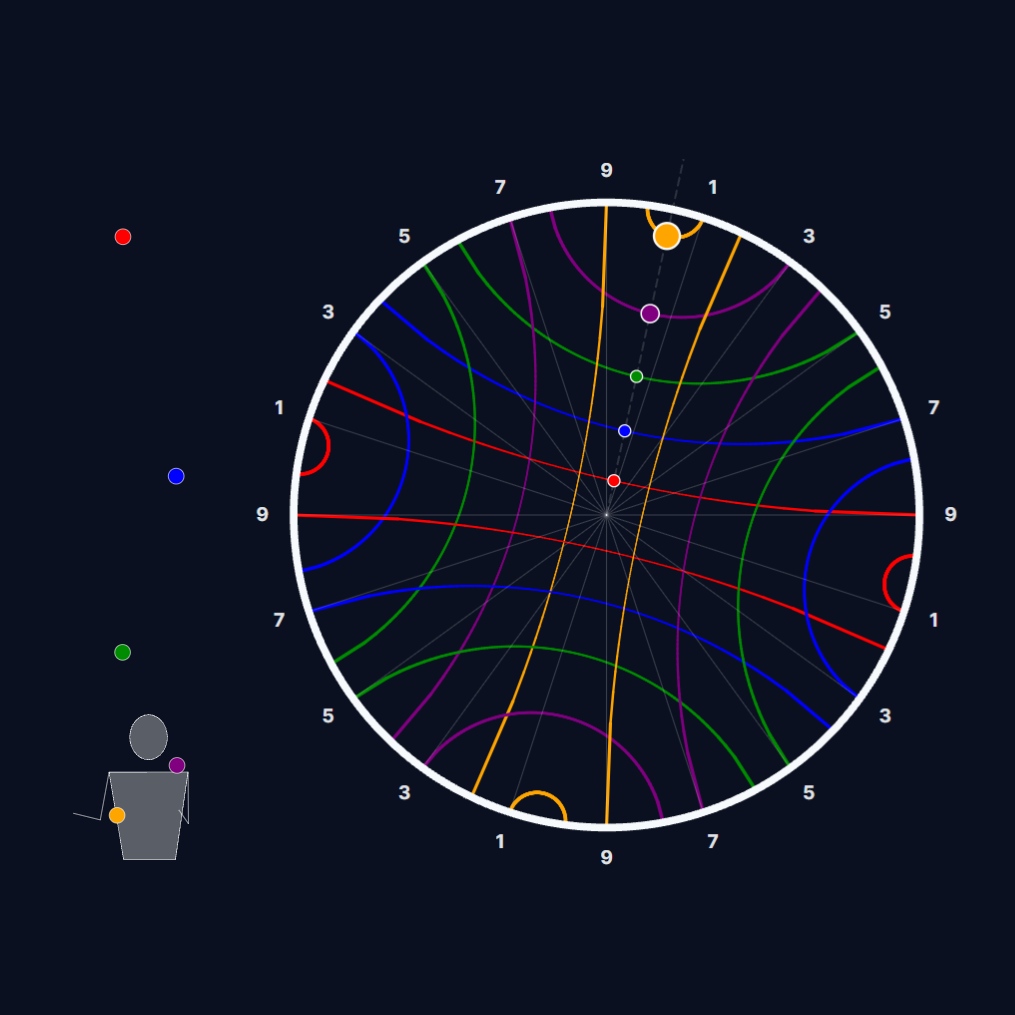
In collaboration with world-renowned jugglers and mathematicians, this article investigates the dynamics, control theory, and mathematics underlying the computer modeling of a specific class of juggling patterns known as siteswaps. It examines the relative difficulty of juggling various siteswaps, proposing a framework for classification based on simulations using inferred performer-specific probabilistic parameters. In addition, the article develops and features novel visualisation utilities, such as polar state diagram representations.
Featured Projects

Fractal Visualiser
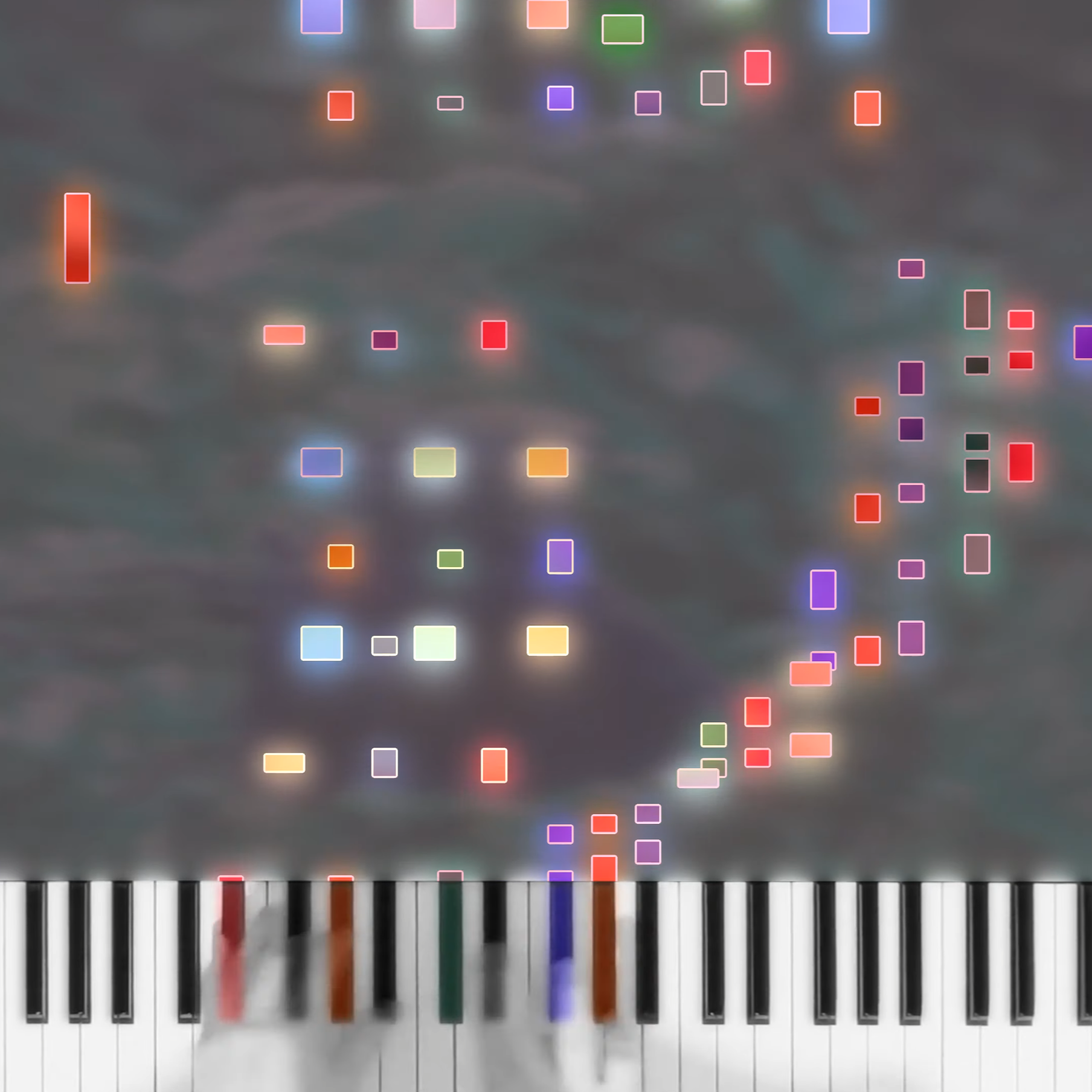
Chromesthetic Generative Music Visualiser

Juggling Tracking, Siteswap Inference, and Analysis
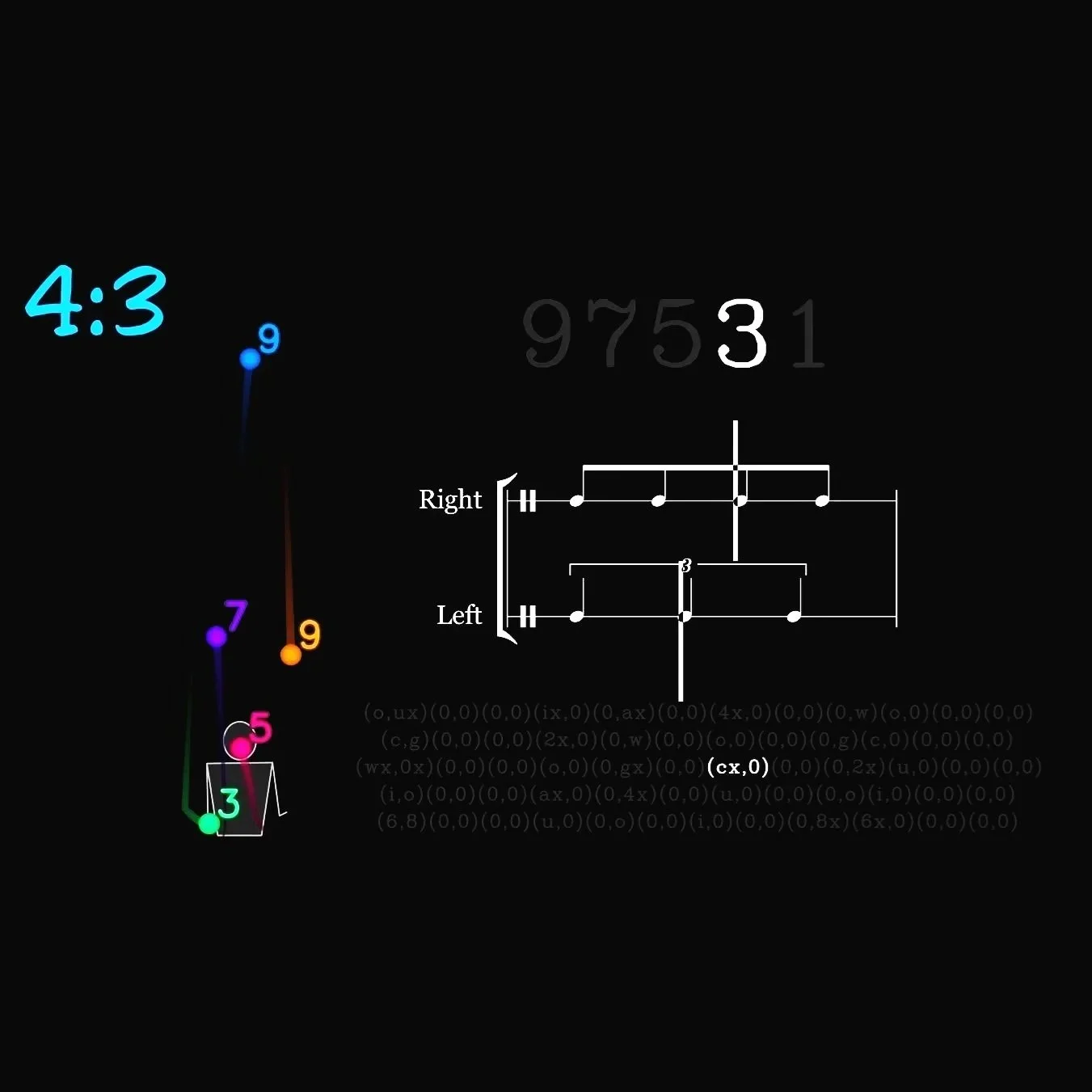
Polyrhythmic Siteswap Animator & Hybrid Juggling-Music Notation System
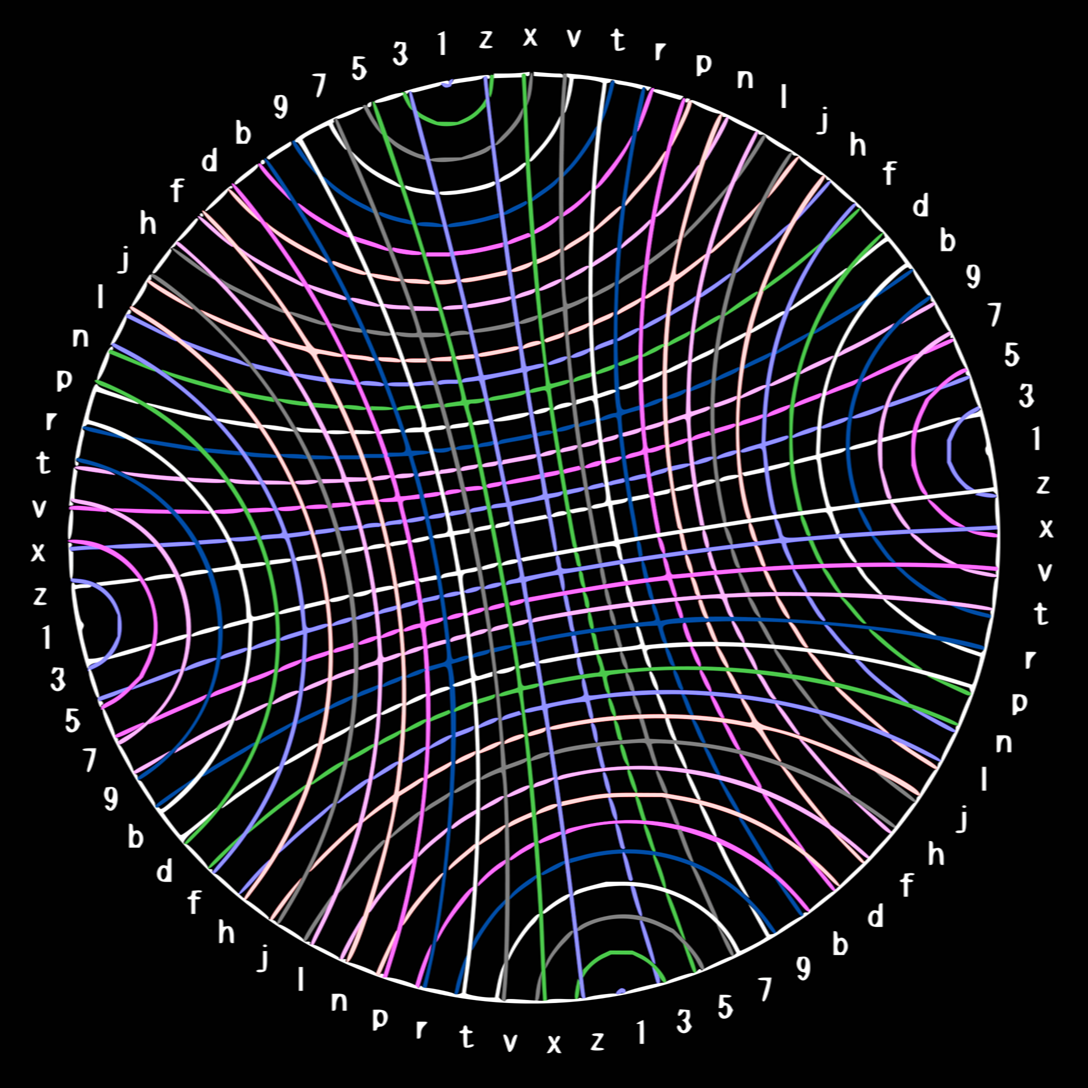
Juggling Performance Simulation and Visualisation

PVC Tube Instrument

Siteswap Math Playground
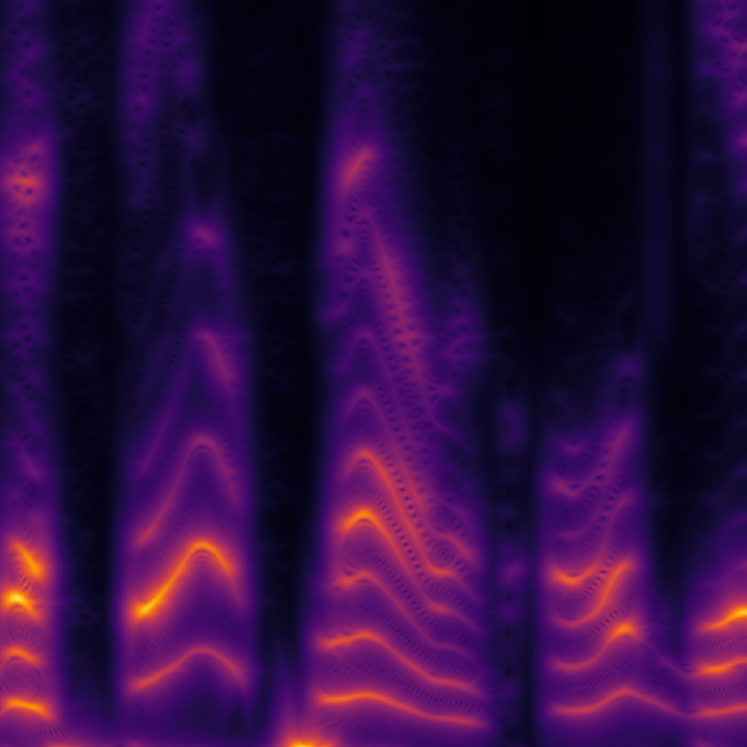
Reconstructive Ideal Fractional Transform (RIFT)
Dynamic Time Signature Recognition via the Metrogram Transform
Interactive Cycle of Fifths Visualiser
Online Siteswap Animator and Visualiser